The liver plays a leading role in the breakdown of xenobiotics. Genetically determined differences in the catalytic activity of liver enzymes that break down xenobiotics explain why alcoholic hepatopathy can develop even after relatively small doses of alcohol. Diet therapy for toxic liver injury is a necessary factor in supporting sanogenesis.
Hepatoprotection in toxic liver injury is aimed primarily at preventing the progression of hepatocyte damage and stimulating reparative processes in the liver. Foods rich in bioflavonoids, plant fibre, carotenoids, and oligosaccharides can themselves help accelerate recovery processes in the liver.
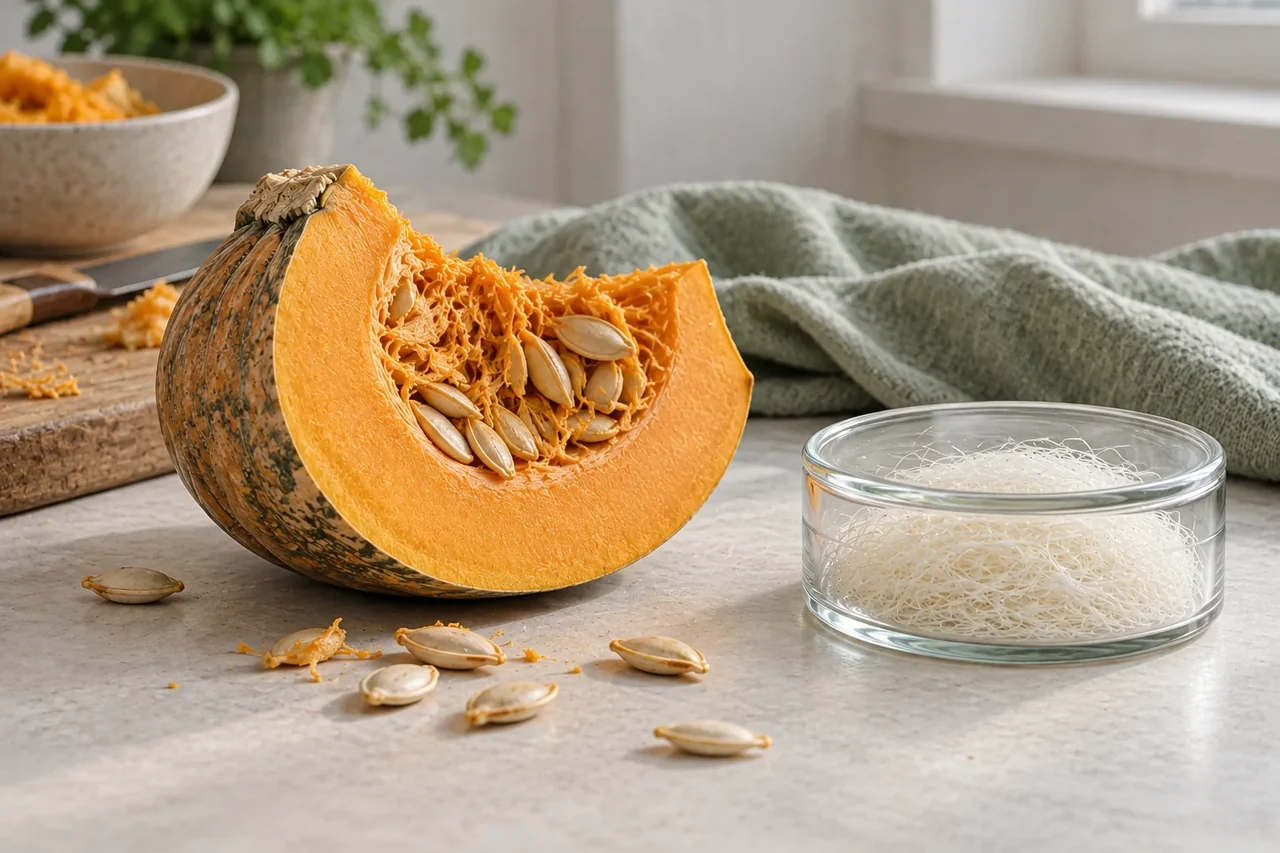
Epidemiological studies have shown that carrots and pumpkins are the main sources of alpha- and beta-carotene in the diet. The large amount of carotenoids in pumpkin accounts for its hepatoprotective effect. Beta-carotene has been shown to have a hepatoprotective function. It mainly prevents cholestatic liver injury, and this hepatoprotective effect is not directly related to antioxidant activity.
The use of carrot juice as a hepatoprotective agent has shown effectiveness in experimental liver injury caused by carbon tetrachloride.
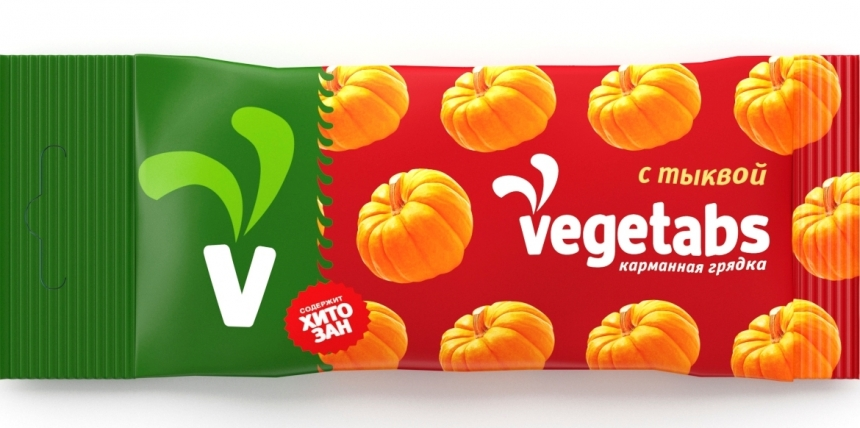
At the same time, unlike other food products, when plants rich in carotenoids are added to food mixtures, their “dosage” must be strictly observed and taken into account when prescribing a diet, to avoid vitamin A overdose and liver injury. The “Vegetabs with pumpkin” product takes these requirements into account, and its carotenoid content fully complies with the recommendations of the Institute of Nutrition.
Along with carotenoids, pumpkin also contains other hepatoprotectors of peptide origin.
Pumpkin seed extract acts synergistically with drugs in the ACE inhibitor and calcium ion antagonist groups; it prevents increases in aminotransferases and phosphokinase caused by simvastatin.
In concentrated form, “Vegetabs™ with pumpkin” contains all the components needed for therapeutic nutrition in toxic liver injury. “Vegetabs™ with pumpkin” contains chitosan oligomers, pumpkin, natural pumpkin juice, carrots, and Jerusalem artichoke. This complex is a comprehensive source of beneficial substances for preventing liver dysfunction and stimulating recovery processes. Chitosan oligomers act both as a vehicle for delivering nutrients to liver cells and as a vehicle for removing toxic substances. In addition, the oligomers themselves stimulate and regulate cellular functions. The product's positive effect is attributed to its ability to halt intoxication of both external and internal origin and to have a preventive effect against alcohol- and medication-induced liver injury. Carrots and pumpkin, rich in flavonoids and carotenoids, protect liver-cell membranes and prevent the progression of fatty liver disease. Chitosan oligomers help ensure the fullest absorption of nutrients from pumpkin and carrots that are needed by the liver. In addition, the pumpkin-carrot-Jerusalem-artichoke complex has a mild choleretic effect and prevents bile stasis and stone formation.
Study objective:
To assess the effect of “Vegetabs™ with pumpkin” on the course of diseases associated with liver injury in alcoholic hepatopathies.
The study was conducted at the toxicology department of City Clinical Hospital No. 33 from 12 January 2007 to 22 April 2007. It involved 20 patients admitted to the toxicology department with a diagnosis of “alcohol intoxication.” The study included 20 patients who, after the symptoms of alcohol intoxication had been relieved, showed impaired liver function: cytolysis, high gamma-glutamyl transpeptidase (GGTP) values, hepatomegaly, and jaundice. Alcoholic hepatitis was diagnosed on the basis of medical history and clinical and instrumental examinations.
All patients received standard treatment using enterosorbents, saline solutions, and vitamins.
“Vegetabs™ with pumpkin” was prescribed at four chewable tablets per day for one month.
Results.
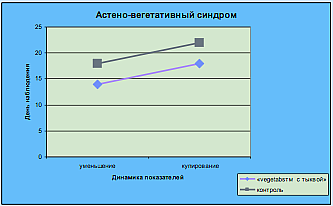
In the main group, asthenovegetative symptoms subsided an average of 4 days earlier than in the control group—on days 18 and 22 of therapy, respectively (Chart 1).
Chart 1
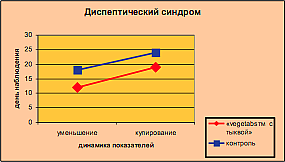
Dyspeptic disorders in the main group receiving “Vegetabs™ with pumpkin” subsided 5 days earlier than in the control group (days 19 and 24) (Chart 2).
Chart 2
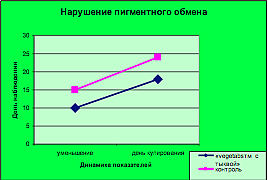
Pigment metabolism normalised 6 days earlier than in the control group (days 18 and 24)—Chart 3.
Chart 3
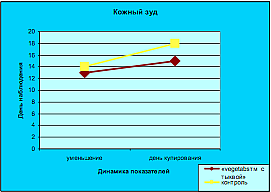
In patients receiving “Vegetabs™ with pumpkin,” itching decreased and disappeared on days 13–15 of observation, compared with days 14–18 in the control group; itching persisted for more than 25 days in one patient (Chart 4).
Chart 4
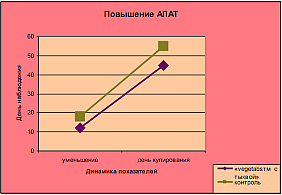
A decrease in ALAT activity was observed by days 9–14 of observation; normalisation occurred by discharge or during follow-up tests. This was seen in most patients by day 30 and in all patients after a month and a half. In the control group, elevated ALAT persisted for 1.5–2 months in 4 patients (Chart 5).
Chart 5
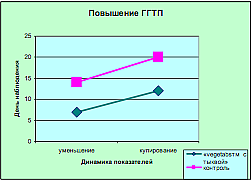
GGTP values normalised by day 12 of observation in the experimental group and by day 20 in the control group (Chart 6).
Chart 6
The positive effect of diet therapy using “Vegetabs™ with pumpkin” may be explained by the presence of active chitosan oligomers (oligosaccharides) in the product. Together with Jerusalem artichoke, they have an enterosorbing and detoxifying effect and, through prebiotic activity, relieve dysbiosis and endotoxin aggression. This indirectly reduces the toxic effect on the liver of products from pathogenic microflora entering the portal vein system. In addition, chitosan oligomers can bind bile acids and bilirubin. Bioflavonoids contained in concentrated form in the product have a direct hepatoprotective effect.
Conclusion
The results obtained from using “Vegetabs™ with pumpkin” indicate the preparation's effectiveness in patients with alcoholic liver dysfunction and its acceleration of the recovery of damaged hepatocytes. This makes it possible to recommend “Vegetabs™ with pumpkin” for wide use as a component of diet therapy for alcoholic hepatopathies.