

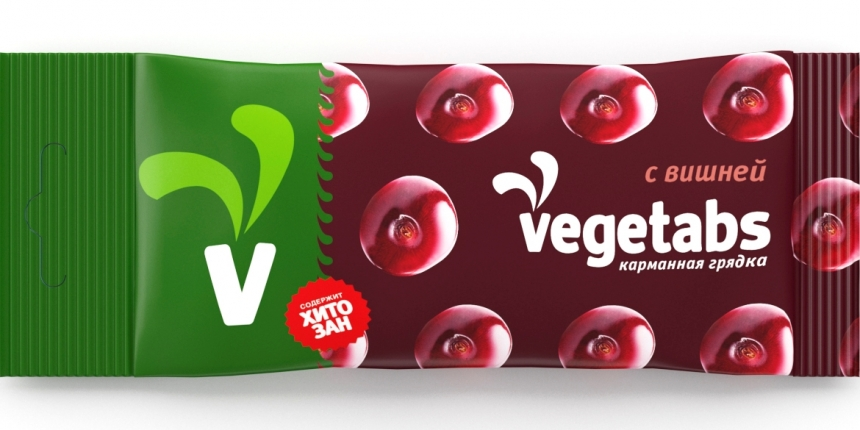
VEGETABS with cherry is a vitamin and mineral complex that has a beneficial effect on the formation and strengthening of immunity. It is particularly useful in autumn and spring for preventing colds and as a source of essential nutrients and vitamin C. Chitosan oligomers act as a carrier, ensuring maximum absorption of beneficial substances. For example, against this background, vitamin C absorption increases sixfold and trace-element absorption increases three- to fourfold. Chitosan oligomers stimulate the synthesis of interferon, which is responsible for antiviral immunity. VEGETABS with cherry consists of chitosan oligomers, cherries, blackcurrants, natural cherry juice, and Jerusalem artichoke.
A positive effect on all components of immunity is a proven property of dietary chitosan. It prevents microbes and viruses from adhering to various cells, beginning in the gastrointestinal tract, and stimulates interferon production and phagocyte activation. Along with vitamin C, the product contains large amounts of bioflavonoids and anthocyanins. These components help vitamin C enter the body's cells. By suppressing free-radical oxidation, bioflavonoids strengthen the body's natural protective barriers.
Study objective: to assess the preventive effect of VEGETABS with cherry in people prone to frequent acute respiratory viral infections (ARVI) and recurrent herpes simplex during the autumn season.
The study was conducted at the Department of Secondary Immunodeficiencies of Infectious Diseases Clinical Hospital No. 2 from 13 September to 14 December 2006 and involved 20 patients. Participants were selected if they had frequent ARVI (up to 3–4 times a year) and recurrent herpes simplex. The preparation was prescribed as one tablet twice a day for one month. The control group consisted of 14 patients who had not been vaccinated against influenza and were not using immunomodulatory agents.
The experimental group included 20 patients aged 18 to 40: 4 men and 16 women.
Before taking VEGETABS, the patients' immune status was assessed. Most showed a tendency toward CD4 levels below 450 cells/µl (mean ). Seven patients had CD4 values within the normal range, no lower than 500 cells/µl. Mean CD8 was cells/µl, and the IRI index ranged from 0.72 to 1.0 (mean ). Circulating immune complexes (CIC) exceeded the normal level (170 conventional units) in almost all patients and amounted to .
The study results in the control group did not differ substantially.
Patients and the control group were monitored for 2–2.5 months after taking VEGETABS.
Within the observation period, 16 patients in the experimental group had no episodes of “colds”; 4 were diagnosed with mild ARVI, and 2 of those had herpes simplex lesions on their lips.
In the control group, 8 patients were diagnosed with influenza or ARVI when they visited outpatient clinics. Two others, without signs of upper respiratory tract involvement, had herpes simplex lesions on the wings of the nose and on the lips.
Assessment of immunological indicators showed a tendency toward “normalisation” of CD4 (mean cells/µl) and a decrease in CD8 (mean cells/µl). The IRI index remained within the normal range (1.0–1.2) in all patients. After the course of therapy, CIC amounted to conventional units.
The dynamics of the immunological indicators suggest a tendency toward stabilisation of cellular immunity indicators.
The study results in the control group showed no substantial changes.
Conclusion: after the use of VEGETABS with cherry, a fairly strong preventive effect of the preparation can be observed in the group of patients prone to frequent ARVI and recurrent herpes simplex.