


Introduction
Computer Vision Syndrome (CVS).
As computer use has become widespread, complaints from people who work at computers have increased. It can be said that we are facing a new and increasingly common form of eye pathology: Computer Vision Syndrome. This condition is the visual organ's response to excessive strain.
Complaints from people who spend most of their working time in front of a monitor can be divided into two groups: “visual” and “ocular.” The first includes blurred vision, slow refocusing from near objects to distant ones and back, double vision, and rapid fatigue while reading. The second includes burning eyes, a gritty sensation under the eyelids, pain around the eyes and forehead, pain when moving the eyes, and redness of the eyeballs. These symptoms are generally grouped under the term “asthenopia” (literally, visual fatigue).
Prolonged computer work does not cause organic eye diseases.
A study of the effect of working with a display on vision showed that some users develop temporary (so-called false) myopia during a work shift.
Changes in the muscular balance of the eyes, reduced contrast sensitivity, and other functional disorders also occur.
One of the most common problems among computer users is dry eyes. Several factors contribute to this unpleasant condition: people blink less often when working at a computer (the blinking rate is about one-third of normal); they open their eyes wider when looking at a monitor image, which increases the rate at which tears evaporate from the eye surface.
According to estimates by various ophthalmologists, these complaints occur in 100% of computer users and depend on the duration and nature of their work. Asthenopia appears after two hours of computer work in some users, after four hours in most, and in almost everyone after six hours of continuous work in front of a monitor.
There are many causes, all related to optics, including physiological optics, which studies vision and the functioning of the visual analyser in the cerebral cortex. At the same time, asthenopia also occurs with organic eye diseases such as cataracts, glaucoma, and vascular pathology. These conditions reduce patients' quality of life. Household tasks requiring visual concentration become difficult. Watching television, reading, sewing, knitting, and similar activities may become impossible.
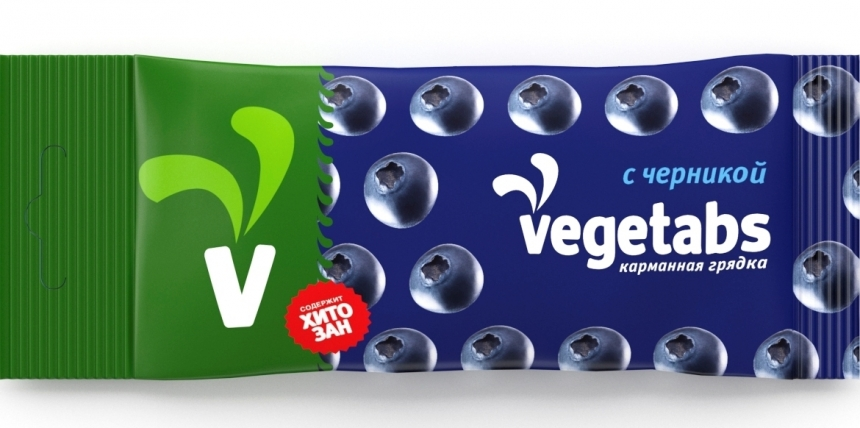
Sonat LLC developed a unique product, “Vegetabs™ with blueberry,” containing carrot and blueberry powders, as well as dietary chitosan and Jerusalem artichoke. Vitamins A and E in carrots have a restorative effect on the retina. Vitamin E helps restore night vision. Blueberry anthocyanidins restore retinal cells and improve visual acuity. Chitosan combined with vitamin C stimulates and strengthens the ligament apparatus and muscles of the eye. Jerusalem artichoke is a source of minerals needed in the fluid media of the eyeball.
Patient characteristics.
The main group included 20 people: 11 women and 9 men aged 21 to 67, with a mean age of years. Eight had organic eye diseases—cataracts or glaucoma. Twelve had Computer Vision Syndrome. All patients had asthenopia.
The average time to the onset of visual fatigue ranged from 0.5 to 2.5 hours, with a mean of hours. The control group consisted of 20 people matched for age, sex, and diseases. It included 10 women and 10 men aged 23 to 65. The mean age was years. Nine had organic eye diseases—glaucoma or cataracts. Eleven were diagnosed with CVS. The onset of visual fatigue ranged from 0.5 to 3 hours, with a mean of hours.
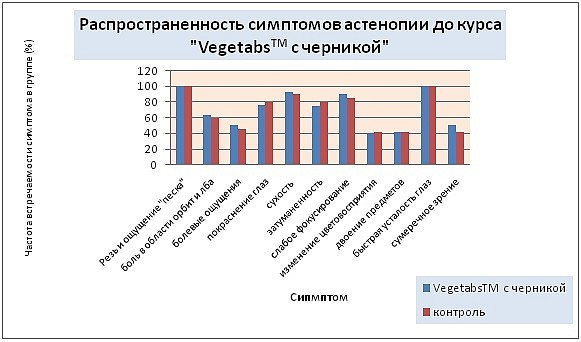
Before “Vegetabs™ with blueberry” was prescribed, no difference in asthenopia symptoms was found between the groups. This is illustrated in Figure 1.
All participants in the main group received “Vegetabs™ with blueberry” for one month. Alongside use of the product, patients were given recommendations on work schedules and exercises for visual gymnastics.
Study results.
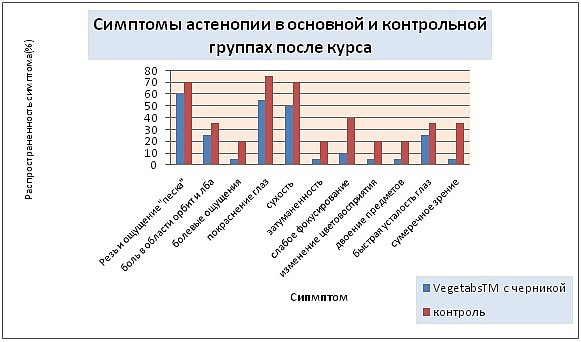
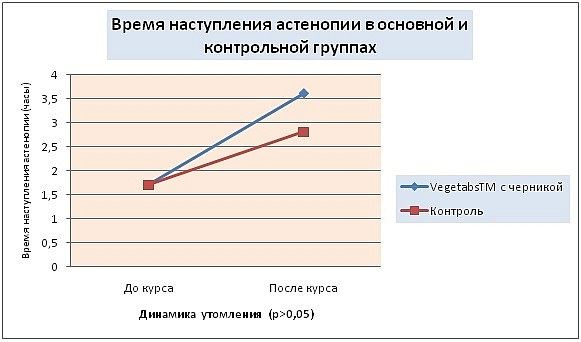
After using “Vegetabs™ with blueberry,” all study participants showed a reduction in the severity of asthenopia. The time before symptoms of visual fatigue began increased from hours to hours (). A significant reduction in all asthenopia symptoms was reported. The most pronounced effect was seen for “pain around the orbits and pain when moving the eyes”; complaints related to accommodation disorders decreased. Improvements in colour perception and night vision were particularly notable.
The control group did not show such a significant improvement in visual focusing, a reduction in pain intensity, or a decrease in dry eyes. No significant improvement in colour perception or night vision was noted either.
Comparison of the main and control groups showed a significant reduction in symptoms for the following indicators: “red eyes,” “tearing or dry eyes,” “blurred vision,” “poor focusing,” “changes in colour perception,” “double vision,” “rapid eye fatigue,” and “night vision.”
The study data are shown in Figure 2.
Compared with the control group, the main group taking “Vegetabs™ with blueberry” also showed a substantial increase in the time they could work without asthenopia symptoms—see Figure 3.
Conclusion
Thus, use of “Vegetabs™ with blueberry” together with an appropriate work schedule and therapeutic exercise resulted in a significantly greater reduction in asthenopia levels than in the control group. No allergic or adverse reactions were identified. The effect of “Vegetabs™ with blueberry” may be due to a balanced combination of ingredients containing sources of glucosamine, mineral salts, vitamins, bioflavonoids, and anthocyanidins.