
Growth-regulating properties and induction of disease resistance in plants
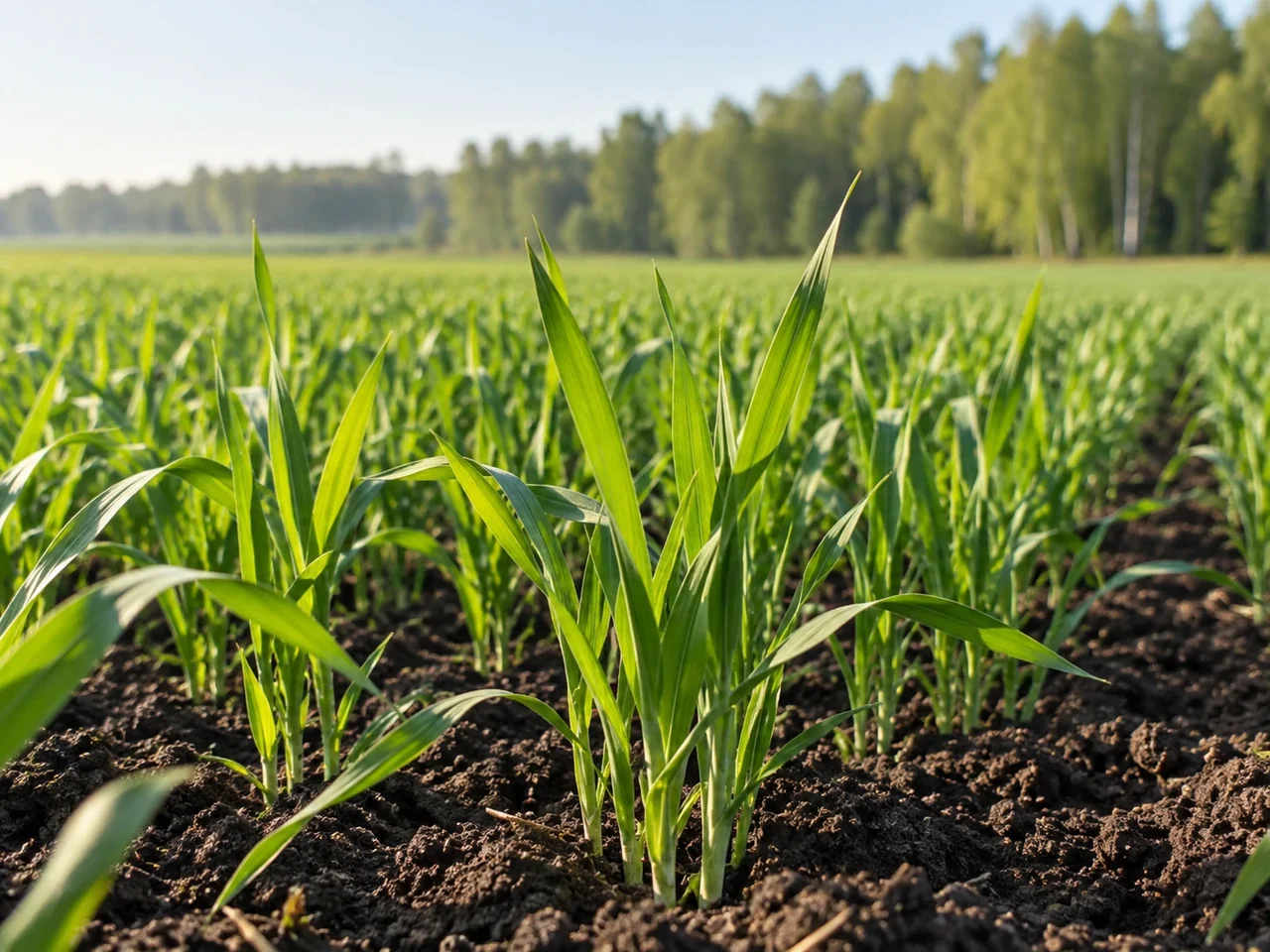
Chitosan is a highly effective growth-regulating substance. Its growth-regulating activity is explained by the formation, during decomposition, of readily assimilated nitrogen located close to the target. Some formulations decompose while releasing ethylene, which enhances the preparation's effect. As a result of this combined action on plants, chitosan preparations form a powerful root system, increase the number of grains, produce a stronger stem, and promote more vigorous tillering, ultimately helping protein accumulate in the grains. At the same time, chitosan preparations stimulate resistance to stressful conditions such as frost, drought, and excess moisture. In addition to increasing yields, chitosan's growth-regulating properties indirectly help combat pathogens: a stronger plant, from an early growth stage, is better able to resist pathogens and adverse conditions. Thus, the cationic polysaccharide chitosan can rightly be considered an inducer of disease resistance in plants.
Chitosan's ability to form films is also important. This valuable property is enhanced by the film's optimal moisture retention at 6°C and below and its selective properties with respect to and ; the film acts as a barrier to pathogen penetration. Under natural conditions, a chitosan film has a lower coefficient of linear expansion than a carboxymethyl cellulose film, providing more favourable conditions for seeds.
This allows us to state with confidence that, owing to their combined action, chitosan-based preparations have significant advantages over chemical preparations.
Professor Hadwiger first demonstrated chitosan's effectiveness in plant protection in 1986. When crop seeds are treated with small doses before sowing, it acts as an inducer of plant resistance to disease, especially in cereals. Chitosan thickens plant stems, protects them from lodging, and helps increase and strengthen the root system. The increase in cereal yields under the effect of chitosan is estimated at an average of 20%. Japan uses 1,800 tonnes of chitin annually for agricultural needs; the United States uses 600 tonnes.
Antiviral properties
Chitosan has a broad range of unique biological activities. One is its ability to induce resistance to viral diseases in plants, inhibit viral infections in animal cells, and prevent the development of phage infections in infected microorganism cultures.
Chitosan's ability to suppress viral infections in plants does not depend on the type of virus. It is mediated by its effect on the plant and is determined by chitosan inducing resistance to viral infection. By mimicking a plant's contact with a phytopathogen, chitosan induces a broad range of plant defence responses. These responses modulate the plant's hypersensitive reaction to viral inoculation, limit the systemic spread of viruses and viroids through the plant, and lead to systemic acquired resistance.
Chitosan's effect on viral infections in animals is determined by its ability to influence both the inductive phase of the immune response and many effector mechanisms of the immune system. Chitosan's ability to induce interferon production may be another important factor in antiviral resistance. Chitosan sulfoderivatives that specifically inhibit retrovirus replication have been synthesised.
Chitosan is safe for humans, farm animals, and the environment; under natural conditions, it breaks down to form the simple and completely safe monosaccharide D-glucosamine.
Experience with chitosan in agricultural veterinary practice
Antibiotics are generally used to treat bacterial diseases in young farm animals. They have immunosuppressive and cumulative effects, while microorganisms that cause infectious diseases develop resistance and the therapeutic effect is lost. Chitosan obtained from Kamchatka crab shells was selected as one promising preparation. A 3% chitosan gel solution was used on calves and piglets in three districts of the Tula region. The preparation was administered parenterally at a dose of 2–3 ml per kilogram of live weight, twice a day for 3–4 days. The results showed that all calves in the experimental group were alive and healthy, while mortality in the control group was 20–40%; the experimental group's average daily weight gain was 50% higher than that of the control calves. Blood biochemical indicators showed normal phosphorus, reserve alkalinity, and protein fraction levels.
Conclusion
Previously used in pharmacology, cosmetology, the food industry, and other areas of public activity, this natural compound is gradually becoming one of the leading natural means of increasing productivity and improving the quality of cultivated products, thanks to its unique properties. Because chitosan is widespread in nature, it does not impose a pronounced anthropogenic burden on the living environment.
This compound is widely used in agriculture in Far Eastern countries, the United States, and Canada. Its range of uses is extremely broad: above all, it is a growth stimulant, fungicide, nematicide, and antiviral agent that significantly increases crop yields. Its use in indoor vegetable production as a soil conditioner is considered promising. Ongoing experiments in animal husbandry are opening new possibilities for using this remarkable natural compound. Research by South Korean scientists demonstrated a very encouraging trend toward increased weight in experimental animals and reduced cholesterol in the meat. The cited conclusive data indicating chitosan's high effectiveness provide grounds to state that chitosan-containing compounds should take a leading place in agricultural enterprises' management systems in order to increase production volumes, improve product quality, and maintain environmental stability.